On This Page
What is Hypnosis?
History
Uses
Christians and Hypnosis
'Means' Tests
What is Hypnosis?
Etymology
We get the word 'hypnosis' from Hypnos the Greek god of sleep whose Roman counterpart was Somnus. In the Iliad (Homer’s epic poem) he described Thanatos (the personification of peaceful death who guided souls to the afterlife) as Hypnos' twin brother. Hypnos also gives us the familiar pharmacological term 'hypnotic' for a drug used to induce sleep.
Definition
According to the Cleveland Clinic
hypnotherapy is a heightened state of concentration and focused attention. Guided by a trained hypnotist hypnosis allows you to be more open to suggestions about making healthful changes in your perceptions, sensations, emotions, memories, thoughts or behaviors.
It is used to treat mental health conditions like depression, panic attacks, phobias, PTSD. and also help relieve symptoms of chronic conditions, including asthma, chronic pain, fibromyalgia, insomnia, migraines etc. Other uses include quitting smoking, encouraging weight loss etc. [01]
And from the National Library of Medicine
Hypnosis is the induction of a deeply relaxed state, with increased suggestibility and suspension of critical faculties. Once in this state, sometimes called a hypnotic trance, patients are given therapeutic suggestions to encourage changes in behavior or relief of symptoms. For example, in a treatment to stop smoking, a hypnosis practitioner might suggest that the patient will no longer find smoking pleasurable or necessary. Hypnosis for a patient with arthritis might include a suggestion that the pain can be turned down like the volume of a radio. [02]
Crosswalk.com (A Christian Viewpoint)
On crosswalk.com Dr. Roger Barrier first presents a negative and a positive definition of hypnosis
Negative: "The induction of a state of consciousness in which a person loses the power of voluntary action and is highly responsive to suggestion or direction.”
Positive: “Hypnosis is a state of human consciousness involving focused attention and reduced peripheral awareness and an enhanced capacity for response to suggestion.”
Followed by his favorite definition
"A state which resembles sleep but is produced by a person who can then make suggestions to which the person in this state can respond. [03]
However, many if not most Christians recognize there may be specifically spiritual issues involved.
History
Andrew Fergusson who was CMF (Christian Medical Fellowship) General Secretary in the 1990 wrote,
“Activities we would probably call hypnotism have been described for at least 3,000 years. The Ebers Papyrus describes Egyptian soothsayers using hypnosis, and 'the Hindu fakirs, the Persian magi, the Indian yogi and the Greek oracles also used similar methods under different names'.
However, it was the Viennese physician Franz Anton Mesmer (1734-1815) who drew most attention to the phenomenon, and this led to another name for hypnotism - 'mesmerism'. As psychology was studied more at the turn of this century, interest increased, and some psychological casualties from the First World War were treated with hypnosis.
From the early 1980s onwards there has been still more interest associated with the rise of alternative medicine. [04]
Franz Anton Mesmer (1734-1815)
Animal magnetism, also known as mesmerism, is a pseudoscientific theory promoted by Viennese physician Franz Mesmer in the 18th century. It posits the existence of an invisible natural force (Lebensmagnetismus) possessed by all living things, including humans, animals, and vegetables.
His claim that this magnetic fluid could have physical effects. It causes illness when blocked and allows healing when manipulated thus is central in the restoration and maintenance of health - all of which was a precursor to hypnosis.
Mesmer’s interest in invisible forces found concrete expression in his early medical practice, where he experimented with using iron magnets to treat illness. Later, he used new techniques which involved “magnetic passes” or sweeping movements of the hands to direct magnetic fluid to diseased parts of the patient’s body. [05.]
 Note: Occultism often teaches that psychic or mystical energy (chi, prana, mana, and so on) flows along energy pathways in the body called meridians. Any system which claims to regulate or manipulate “invisible energies” is, at least potentially, an introduction to occult energies and should be avoided. Since these methods are not based upon the findings of scientific medicine, they are unscientific, whether or not they introduce someone to the occult. Note: Occultism often teaches that psychic or mystical energy (chi, prana, mana, and so on) flows along energy pathways in the body called meridians. Any system which claims to regulate or manipulate “invisible energies” is, at least potentially, an introduction to occult energies and should be avoided. Since these methods are not based upon the findings of scientific medicine, they are unscientific, whether or not they introduce someone to the occult.
Uses
Entertainment
Hypnosis about which we know surprisingly little has, and continues to be, somewhat controversial. It is a commonly performed in front of an audience to entertain them. For example someone why has been hypnotized may be told that something like a book weighs 200 pounds and may struggle to lift it to the utter amusement of the spectators. Others may be convinced that they have just won a lottery.
Those in favor of hypnosis stress that the hypnotist does not ‘control the participants mind. The person being hypnotized is in complete control thus can reject any suggestion that goes against their moral and ethical beliefs.
Use in medical practice
The following is an excerpt from Andrew Fergusson’s article on Hypnosis.
We understand surprisingly little medically about hypnosis, and it has always been somewhat controversial - the British Medical Association first expressed concern at a special meeting in 1890. In addition, most Christians recognise there may be specifically spiritual issues involved. This article attempts a Christian assessment of hypnosis in the medical context and deals briefly with the use of hypnosis for entertainment.
Many who practice hypnotism in the UK are doctors or dentists, or hold proper psychological qualifications, and are members of respected bodies like the British Society of Medical and Dental Hypnosis or the British Society of Experimental and Clinical Hypnosis. However, there are other practitioners with no formal qualifications or accountability.
Medically speaking, hypnotism has been used in investigation and in treatment:
Repressions and regressions
Twentieth century psychology has learnt more and more about the subconscious or unconscious mind (and hypnosis appears to have played a significant part in that understanding). Much psychopathology has been put down to repressions - the 'burying' of memories too painful to contemplate consciously. Hypnosis has been used to uncover such repressions so that the information can be used therapeutically.
Sometimes, and more controversially, patients have been 'regressed' to earlier points in their histories - including to birth and before. By the time this process becomes 'past life therapy' (regressing patients back to the personalities they were in previous reincarnations) Christians will have detected the lie. The Bible rules out reincarnation when we are told 'man is destined to die once, and after that to face judgment'.[2]
This illustration makes it clear that while hypnosis may be a useful 'investigative' tool, some practitioners are clearly being dangerous liars and must be avoided. See Reincarnation
Pain, strain and gain
Therapeutically, hypnosis has been used for medical and dental analgesia. 'Pain' is a combination of an organic response to a painful stimulus and the psychological perception of the feeling we call pain - and of course there are many everyday examples illustrating this interaction; eg the footballer with a serious injury who feels no pain until half-time when his mind is no longer 'taken off' it, or the mother who eliminates the pain in her toddler's knee: 'Mummy's going to kiss it better'.
Hypnosis also claims to have been used in relaxation therapy, to help with the stresses and strains of life, and there is a huge market for aids such as relaxation tapes in our 'therapy culture'. Some non-professional fringe therapists also make much use of suggestion and the 'power of positive thinking' to offer various gains to their clients - eg. to help people become more assertive, or to give up smoking. Amazingly enough, there are even punters around willing to pay large sums of money for regular hypnotic suggestion so that they will live longer!
I am currently most inclined to see hypnosis as being at one extreme of a spectrum of the phenomenon of suggestibility. Modern life abounds with suggestions - the whole enormously effective advertising industry is built on them, and politicians (and preachers?) rely on them. Many aspects of the doctor-patient relationship have a non-specific 'placebo' effect, and the most powerful therapeutic agent any doctor in any specialty will ever have is herself. We legitimately use the power of suggestion in every interaction with every patient, whether we realise it or not, and of course we could use that great power unethically too. Possessing it gives us a powerful responsibility. [06]
Christians and Hypnosis
Andrew Fergusson went on to say,
In 1987, Nucleus carried two sharply contrasting articles from Christians about hypnosis. Norman Vaughton, who at the time lectured and practised privately in hypnotherapy and psychotherapy, wrote [
'As a Christian... I use my mind with all its strange and wonderful potential, in all its different states of consciousness, and with all its different functions, hopefully for good - and that includes the whole fascinating, mysterious and wonderful area of hypnotic effects. They are as much God created and open to use and abuse as any other function of creation. I also know that frequently during hypnotic sessions I will suddenly be filled with an awareness that what I am doing is something of therapy, something of hypnosis, and something of prayer, and they are all so much entwined and the same that I do not really believe any separation would be possible; and of the presence of God I am utterly certain. [07]
By contrast, A. D. Bambridge, a qualified male nurse with a BSc, was concerned that when psychological defences were lowered during hypnosis, there was a considerable risk of demons entering the psyche. He believed the roots of hypnosis were occult and ruled it out absolutely for Christians, concluding
'Whilst hypnosis and its use in hypnotherapy seem merely to be the input by the hypnotist of ideas into the subconscious of a subject in a heightened state of suggestibility, I would contend that this art of psychic manipulation is in fact of demonic origin. Though these roots of hypnosis are now obscured by an undergrowth of scientific jargon, it remains a dangerous activity to anyone involved.' [08]
And nothing has changed since - opinion is even now sharply divided among Christians.
In an article entitled Navigating the Benevolent Side of Hypnosis: A Christian Perspective, author Christina Hoecker sees
"stage or entertainment hypnosis offers a unique and enjoyable experience for Christians and everyone alike. It serves as a fantastic avenue for good, clean, and hilarious fun." [09]
The problem lies in examining the beliefs and methods used by Franz Mesmer, the forerunner of modern hypnotism. Not only was he regarded as one of the Ascended Masters of Theosophy but “his work is considered a forerunner of New Age ideals concerning holistic health and alternative medicine.” [10]
Note : Ascended masters are said to be spiritually enlightened beings who in past incarnations were ordinary humans, but who have undergone a series of spiritual transformations.
Although, this does not necessarily mean that everyone who practices hypnotism is involved in the occult in any way....
Deuteronomy 18:9-14
Some Christians may voice concerns about hypnosis based on Deuteronomy 18:9-14, which warns against various occult practices. It’s crucial to note that the context of this passage refers to forbidden practices tied to pagan rituals, divination, and seeking guidance from mediums. Hypnosis does not inherently fall into these prohibited categories.
When consulting a hypnotherapist, you should inquire into their belief system and ensure their values align with yours and/or they have a full understanding and respect for your fundamental Christian principles and beliefs. [11]
So where does that leave us?
There is no question that as Andrew Fergusson says “hypnosis is just an extreme expression of suggestibility” and although we could have a unending debate as to whether God or the Devil is the author of suggestion and suggestibility, considering the roots of the practice I would definitely stay away from any form of hypnosis.
As my grandmother used to say always “err of the side of caution”
And for those that still wish to consult a qualified hypnotist to help deal with any problems they may be facing (quitting smoking for example) Andrew Fergusson offers a...
'Means' tests
These use the word 'means' in three different ways:
What does the hypnotist MEAN to do?
What is his intention? What is his motive? These questions focus on possibly the most important issue in the assessment - the character of the hypnotist.
However, we might explain the process of hypnosis, it is very clear that there is a significant amount of power involved, just as there always is in any therapeutic relationship. Patients say things like 'I'm under the doctor for my back' and that use of the expression 'under the doctor' is telling us a lot about these power relationships. That power must not be abused, and the therapist must intend the best for the total well-being of his patient, using the safest possible methods, tested as far as possible.
Sadly, there have been occasions, for example, when patients have been sexually abused during hypnosis. Another more recent problem is the so-called 'false memory syndrome' where patients have 'remembered' things which are not objectively true after the inappropriate use of suggestion during hypnotherapy. As another example, I believe that the use of hypnosis for entertainment is always an abuse.
It is perhaps not just the nature of the therapy on offer we need to consider, but the nature of the therapist. This concept of the character of the healer is a real challenge to the Christian integrity of us all, whatever kinds of therapies we are going to use.
What MEANS does the hypnotist use?
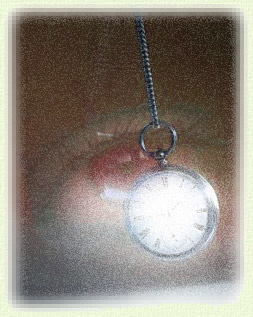
I am not necessarily concerned here about the use of particular techniques for inducing hypnosis, such as the particular words or dangled watches which may form part of that hypnotist's personal 'magic', but rather with the inappropriate use of suggestion.
Several examples have already been given. It is just not possible to take a patient back into a previous life - reincarnation is a lie, so perhaps there is something demonic about that particular deception? Hypnotists must be very careful that in uncovering repressions they do not, deliberately or inadvertently, abuse the power of suggestion and implant 'false memories'. With power comes responsibility. See Reincarnation
What does it all MEAN to the patient?
Given the ignorance we all must have about the nature of hypnotism, it is nevertheless important that the patient knows what she's letting herself in for - ie that she is giving informed consent. She should receive a clear explanation of what is proposed, and be confident that the therapist will not go beyond that.
The patient's conscience is very important and the Bible's discussion of 'food offered to idols '[1 Corinthians 8,10 ] may be relevant here.
Conclusion
If the concepts implicit and explicit in these three rather artificial tests are safeguarded, I currently would cautiously accept the limited use of hypnosis in medical practice for specific indications, but I urge great caution. 'If in doubt, leave it out'.
End Notes
[01] https://my.clevelandclinic.org/health/treatments/22676-hypnosis
[02] Andrew Vickers , Catherine Zollman , David K Payne. Hypnosis and relaxation therapies.
https://pmc.ncbi.nlm.nih.gov/articles/PMC1071579/
[03] Dr. Roger Barrier. Is it Okay for a Christian to Be Hypnotized? https://tinyurl.com/2s4k9uvc
[04] Andrew Fergusson. Hypnosis. Christian Medical Fellowship
https://archive.cmf.org.uk/resources/publications/content/?context=article&id=572
[05] Health Sciences Library System. University of Pittsburgh. https://tinyurl.com/3jhdxpkw
[06] Andrew Fergusson. Hypnosis. Christian Medical Fellowship
https://archive.cmf.org.uk/resources/publications/content/?context=article&id=572
[07] 'Vaughton N. On Hypnosis. Nucleus, January 1987, p18 As quoted in Andrew Fergusson. Hypnosis. Christian Medical Fellowship https://archive.cmf.org.uk/resources/publications/content/?context=article&id=572
[08] Bambridge AD. Hypnotherapy - a reply. Nucleus, April 1987, p25 . As quoted in Andrew Fergusson. Hypnosis. Christian Medical Fellowship https://archive.cmf.org.uk/resources/publications/content/?context=article&id=572]
[09] Christina Hoecker. Navigating the Benevolent Side of Hypnosis: A Christian Perspective.
https://www.entertainmenthypnotists.com/blog/p7z4eppak3byh4ms0leszlpytnn1ib]
[10] Franz Mesmer. About Occult Encyclopedia. https://tinyurl.com/345rbz59
[11] Christina Hoecker. Navigating the Benevolent Side of Hypnosis: A Christian Perspective.
https://www.entertainmenthypnotists.com/blog/p7z4eppak3byh4ms0leszlpytnn1ib
|